

SDG 2030.jpg

University Sustainability Rankings
The Times Higher Education Sustainability Impact Ratings (previously THE Impact Rankings) is the only global ranking that measures how institutions worldwide advance sustainability in line with the United Nations Sustainable Development Goals (SDGs).
The 2030 Agenda for Sustainable Development, adopted by all United Nations Member States in 2015, sets out a shared framework for peace and prosperity for people and the planet, now and into the future. At its heart are the 17 Sustainable Development Goals (SDGs), which represent an urgent call to action for all countries, developed and developing, within a global partnership. The Goals recognise that ending poverty and other forms of deprivation must go hand in hand with strategies to improve health and education, reduce inequalities and stimulate economic growth, while tackling climate change and working to preserve oceans and forests.
The Times Higher Education Sustainability Impact Ratings are based on four core pillars: research on topics related to the Sustainable Development Goals, responsible stewardship of resources and the university community, engagement with local and international communities, and education that equips people to apply sustainability principles in their professional lives.
Each SDG is assessed using specific indicators, including research data supplied by Elsevier, quantitative measures of the university’s contribution, and assessments of its policies and initiatives. Quantitative data are generally normalised to the size of the institution. Policies and initiatives must be supported by documentary evidence, assessed against defined criteria, with additional credit given when that evidence is publicly accessible. The aim is to identify concrete examples of good practice without requiring exhaustive documentation of all activities.
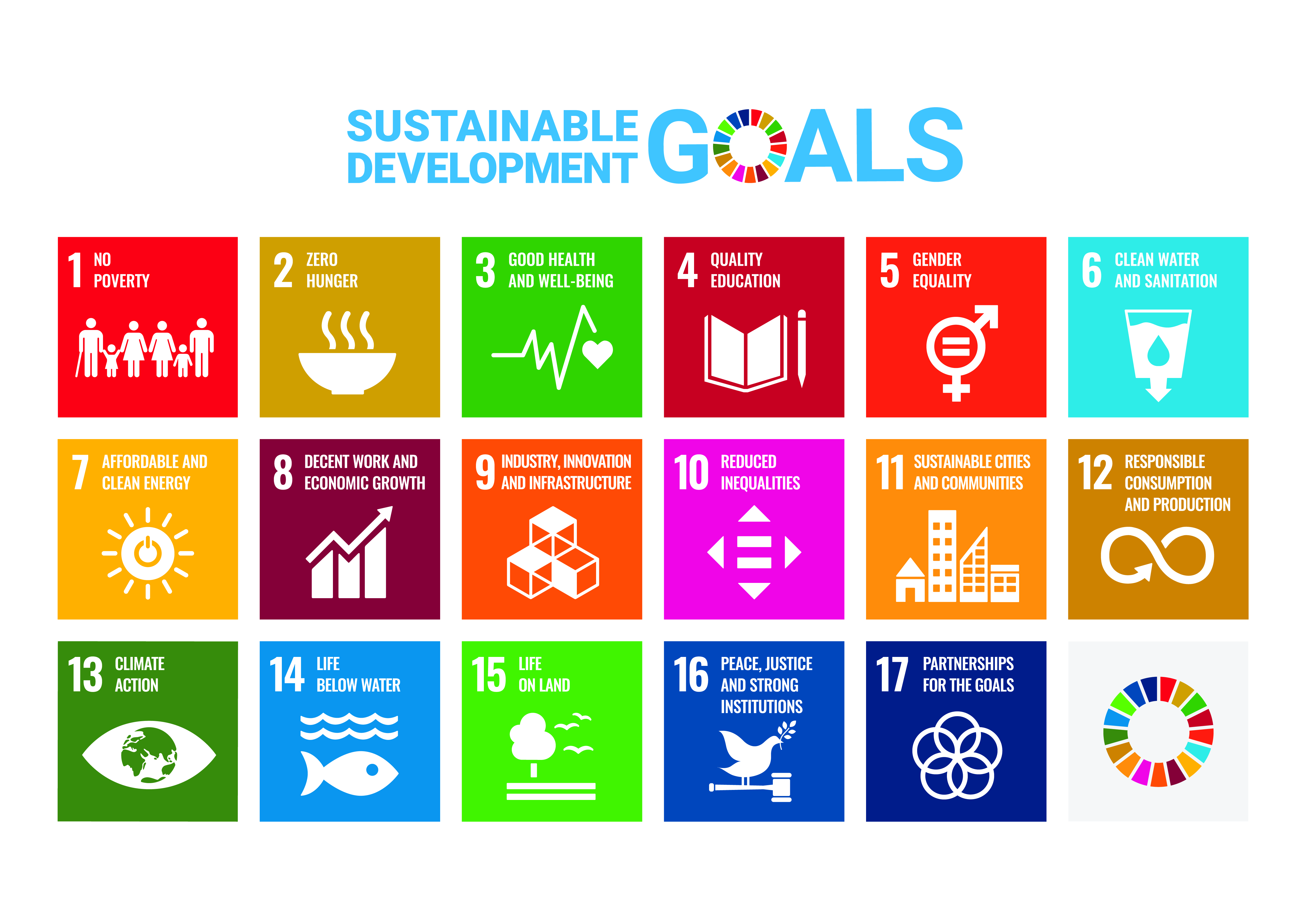
Here is the list of the 17 Sustainable Development Goals:
The first Sustainable Development Goal (SDG) aims to eradicate poverty in all its forms by 2030. It recognises poverty as a major obstacle to human well-being. The SDG targets cover the eradication of extreme poverty, based on a threshold of $1.25 per day, the reduction of poverty according to national criteria, the establishment of social protections, equitable access to resources, resilience in the face of climate change and the integration of poverty issues into policies at all levels. Priority is given to the most vulnerable groups, such as women and children, and CircularPlace’s solution meets this SDG. We contribute to the fight against poverty by encouraging donations to associations that help the most disadvantaged.
SDG 2 aims to eradicate malnutrition by guaranteeing sufficient and nutritious food for all. It promotes sustainable agriculture capable of meeting today’s needs while remaining resilient in the face of climate change. The objectives include increasing agricultural productivity, particularly for small farmers, promoting climate-resilient agriculture, preserving genetic biodiversity and strengthening agricultural research. The emphasis is also on stabilising food markets and limiting price fluctuations. To achieve these aspirations, decisive political action is required, recognising the interdependence of this SDG with other sustainable development goals.
Sustainable Development Goal 2
The health SDG aims to achieve well-being for all, regardless of age. It focuses on key issues such as maternal and child health, and the prevention and treatment of all forms of disease. To succeed, preventive measures, universal access to care, support for research and the development of treatments are essential. It also focuses on sexual and reproductive health, the introduction of universal health cover, and minimising the risks associated with chemical substances and pollution.
The SDG on education calls for quality, accessible and inclusive education for all. It aims to eliminate educational inequalities, while emphasising lifelong learning, from the basics to advanced skills. This goal also focuses on strengthening educational infrastructures, increasing financial aid for students from developing countries, and quality training for teachers.
SDG 5 aims to achieve gender equality, with a focus on empowering women and girls. It tackles discrimination and violence and campaigns for fair representation in key positions. As well as guaranteeing sexual and reproductive rights, this goal underlines the interconnection of the gender dimension with all the other SDGs. It highlights the importance of global action to overcome gender inequalities and strengthen women’s rights.
SDG 6 aims to achieve universal access to safe drinking water, hygiene and sanitation by 2030, with a particular focus on vulnerable populations. It promotes sustainable water management, including measures against pollution and for wastewater treatment. It also encourages cross-border cooperation for effective water management and peace-building between countries.
SDG 7 underlines the centrality of sustainable energy in meeting today’s challenges and shaping the future. It aims to provide universal access to modern, affordable energy services by 2030, while promoting renewable energies and energy efficiency. This objective also encourages international cooperation on clean energy research and technology and infrastructure development, with a particular focus on developing countries.
The SDG aims for inclusive and sustainable economic growth, prioritising full employment and decent work. It calls for the elimination of undesirable work, equal pay and support for entrepreneurship and SMEs. It promotes safety at work for all, including migrants and those in precarious employment. The objective condemns child labour and modern slavery, encourages sustainable tourism and calls for international collaboration to support decent employment in developing countries.
SDG 9 focuses on the development of resilient infrastructures, sustainable industrialisation and innovation. It highlights the importance of infrastructure for economic growth, industrialisation as a lever for employment, and access to financial services for small businesses. The aim is to encourage industrial efficiency and technological research, and to support developing countries in building sustainable infrastructures. It also advocates industrial diversification and adding value to products, and is aiming for universal Internet access in the least developed countries by 2020.
SDG 10 aims to reduce inequalities between individuals and nations. It advocates policies that boost the incomes of the poorest 40% and combat wage discrimination. It would like to see developing countries better represented in global forums, guarantee equal opportunities, strengthen financial regulation, control migration and minimise the cost of remittances.
Sustainable Development Goal 10
SDG 11 aims to develop sustainable cities and communities. It aims to guarantee housing, essential services, safe transport and green spaces for all. The focus is on reducing urban environmental impacts, protecting heritage and building resilience to disasters. It also advocates participatory urban planning and supports the least developed countries in building sustainable constructions using local resources.
SDG 12 advocates sustainable consumption and production patterns. It focuses on the responsible management of the entire product value chain, from reducing food waste to the environmentally-friendly management of chemicals. It encourages sustainable tourism, corporate responsibility and public education on sustainable development. The aim is also to minimise waste, promote sustainable public procurement and review fossil fuel subsidies. We are also responding to this SDG by promoting more responsible consumption and production and a ‘zero waste’ strategy.
SDG 13 focuses on the fight against climate change. It aims to strengthen the resilience of countries, particularly the least developed countries and small island states. This objective advocates the integration of climate issues into national policies, education and awareness-raising. It also stresses the importance of international cooperation, the mobilisation of funds, in particular the Green Climate Fund, and capacity-building to manage the consequences of climate change. We are fighting global warming by limiting the destruction of products and avoiding the production of new ones.
SDG 14 focuses on the conservation and sustainable use of oceans and marine resources. It advocates the sustainable management of resources, the fight against overfishing and ocean acidification, and the strengthening of scientific capacities. It highlights the importance of small island states and less developed countries, while placing small-scale fishermen at the heart of its approach. The objective also insists on compliance with international law, in particular the Convention on the Law of the Sea.
SDG 15 aims to conserve terrestrial ecosystems and biodiversity. It advocates sustainable forest management, the fight against deforestation and the protection of endangered species. It focuses on international cooperation to combat poaching and species trafficking, while seeking to prevent the introduction of invasive species. The objective is to encourage the integration of biodiversity into national policies and the mobilisation of resources for conservation. It also highlights the support given to local communities for sustainable alternatives.
SDG 16 aims to establish peace, justice and strong institutions. It tackles violence, child abuse, corruption and organised crime, while promoting fair access to justice and transparent institutions. It encourages inclusive participation in decision-making and strengthens the role of developing countries in global governance. The objective also emphasises the importance of legal identity for all, the protection of fundamental freedoms and the fight against terrorism, while advocating equality and sustainable development.
SDG 17 promotes strong partnerships between governments, the private sector and civil society to achieve the SDGs. It focuses on resource mobilisation, improved trade, economic stability and the importance of accurate data to measure progress. The objective also emphasises policy coherence, respect for national sovereignty and the establishment of diversified partnerships, while strengthening the statistical capacities of developing countries. Finally, we work in partnership to achieve our objectives, bringing together players involved in the circular economy and social economy structures.